
Insulated Tensile Structures for Year-Round Climate Control
30 Oct 26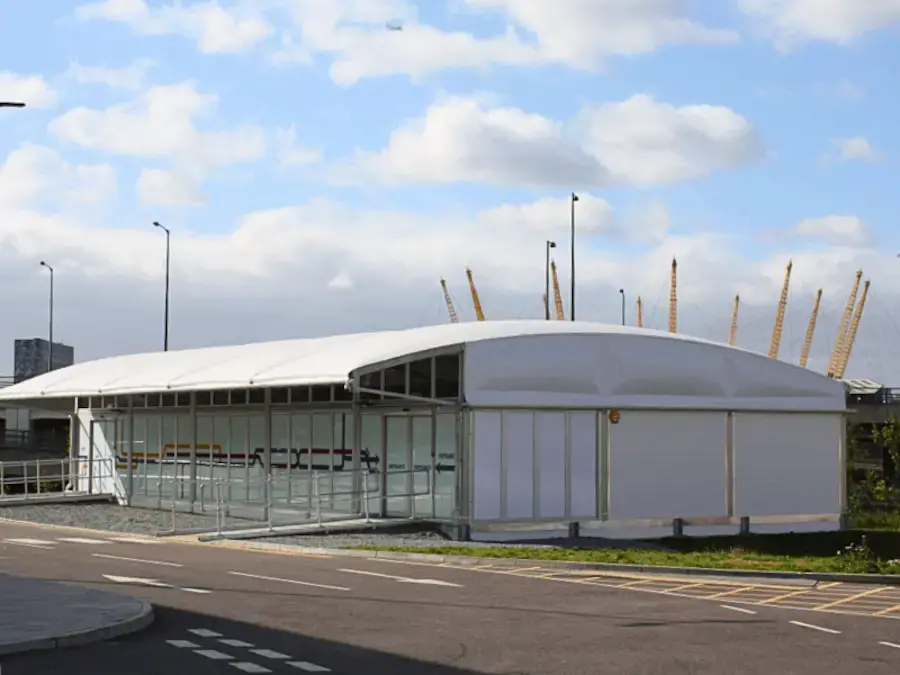
Insulated Tensile Structures for Year-Round Climate Control
Large-span tensile structures offer major advantages in structural efficiency, construction speed and architectural flexibility. But when a space needs to operate year-round, thermal performance becomes just as important as structural design.
Single-skin membranes provide effective weather protection but can have limited thermal resistance. In winter, this can increase heat loss; in summer, solar gain can increase internal temperatures and cooling demand. For facilities that need reliable year-round occupancy, the solution is not simply to add insulation. The complete thermal envelope needs to be considered as a system.
Insulated tensile structures provide a way to improve the performance of the building envelope while retaining the lightweight, flexible characteristics of tensile architecture. Improving Thermal Performance.
- Robert Carter [J&J Carter]
For architects and specifiers, the challenge is to combine thermal efficiency with the large clear spans and distinctive forms that tensile structures make possible. A multi-layer tensile envelope can incorporate insulation, air spaces, internal liners and high-performance membrane materials to improve thermal resistance for year-round tensile structures. The final U-value depends on the complete envelope build-up, including insulation, junctions and structural connections. Careful detailing is also important for managing thermal bridging and condensation risk. For projects requiring a higher-performance envelope, explore J&J Carter's insulated structures.
Choosing the Right Membrane
Thermal performance starts with selecting the appropriate materials for the application. Depending on the project, tensile envelopes can incorporate ETFE cushion systems, PTFE-coated glass-fibre fabrics, PVC/PES membranes and additional insulation or liner systems. Material selection can be used to balance:
- Thermal resistance
- Solar control
- Daylight transmission
- Fire performance
- Durability
- Appearance
- Weight
Explore the available tensile fabric materials to understand the options available for different applications.
Solar Control and Daylight
Large-span buildings can experience significant solar gain, particularly where extensive areas of the envelope are translucent. High-performance tensile systems can combine membrane coatings, insulation and solar-control measures to reduce unwanted heat gain while still allowing diffuse natural daylight into the building. The aim is to create a comfortable internal environment without losing the visual and architectural benefits of a tensile envelope.
Lightweight Construction and Structural Efficiency
Tensile structures can create large column-free spaces using considerably less structural material than many conventional building systems. An insulated envelope can retain this lightweight approach while providing improved environmental control. Where steelwork is required, structural design and membrane engineering can be coordinated from the outset. J&J Carter steel fabrication services support the development of integrated structural and tensile systems.
Faster Construction and Retrofit Potential
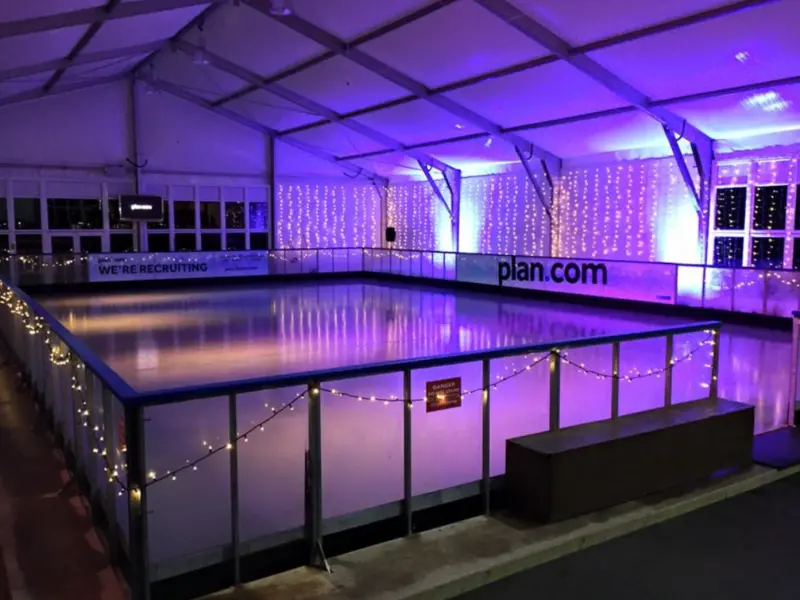
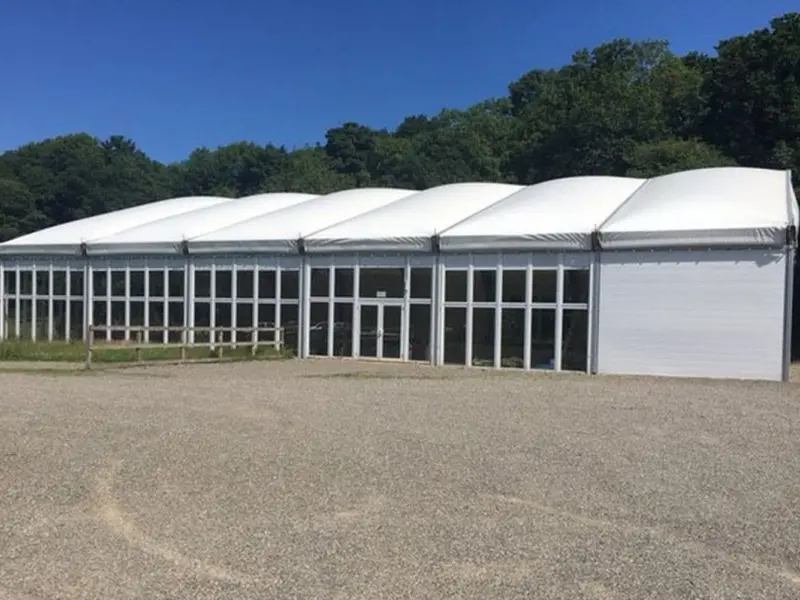
The benefits of tensile construction extend beyond the finished building. Much of the structural steelwork and membrane fabrication can be completed off-site before installation. This can reduce site activity and help streamline construction programmes, although actual programme savings depend on project size, complexity and site conditions.
J&J Carter design, engineering and installation services bring these stages together within a single project process.
Retrofitting Existing Structures
Insulated tensile systems can also be considered when upgrading an existing structure. Where the existing frame has sufficient capacity, a secondary insulated lining or additional envelope layer may improve thermal performance without requiring complete demolition and reconstruction. This approach can be particularly valuable for facilities that need to remain operational during the works.
Whole-Life Value
For clients, QSs and asset managers, the value of an insulated tensile structure extends beyond its initial construction cost. A multi-layer tensile thermal envelope can reduce structural and foundation requirements in suitable applications, while improved thermal performance can help reduce heating and cooling demand.
The actual energy and cost savings will depend on the building's size, occupancy, climate, operating hours, envelope specification and building-services strategy. For this reason, performance should be established through project-specific calculations rather than generic percentage savings. Upgrading an existing structure can also extend its useful life and create a more suitable year-round facility without the cost and disruption of a complete rebuild.
Case Studies
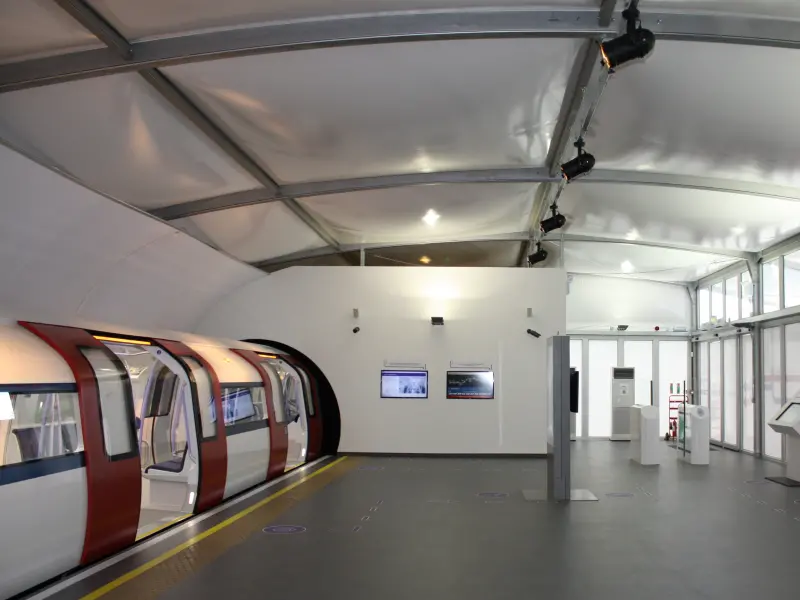
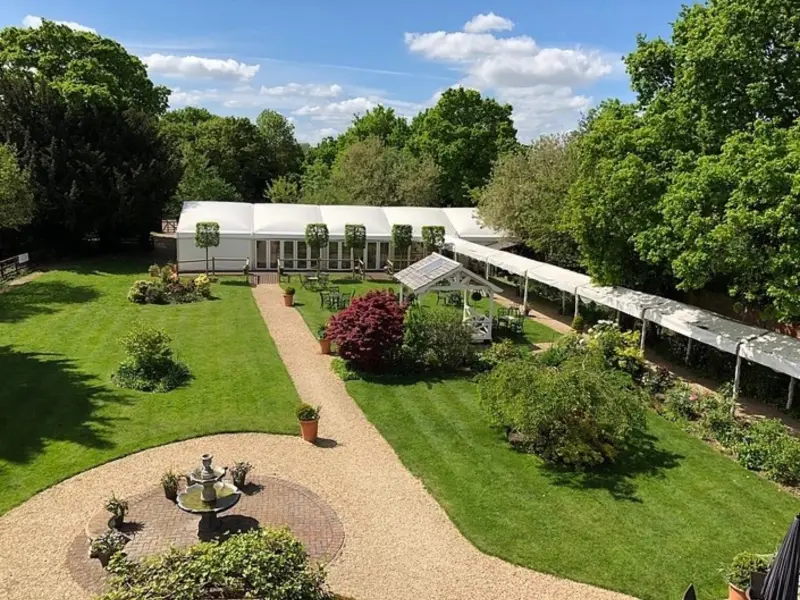
J&J Carter has delivered tensile structures for a wide range of applications and environmental conditions.
- Kingsmill Hospital Deck Car Park – a lightweight tensile solution developed around an existing structural deck.
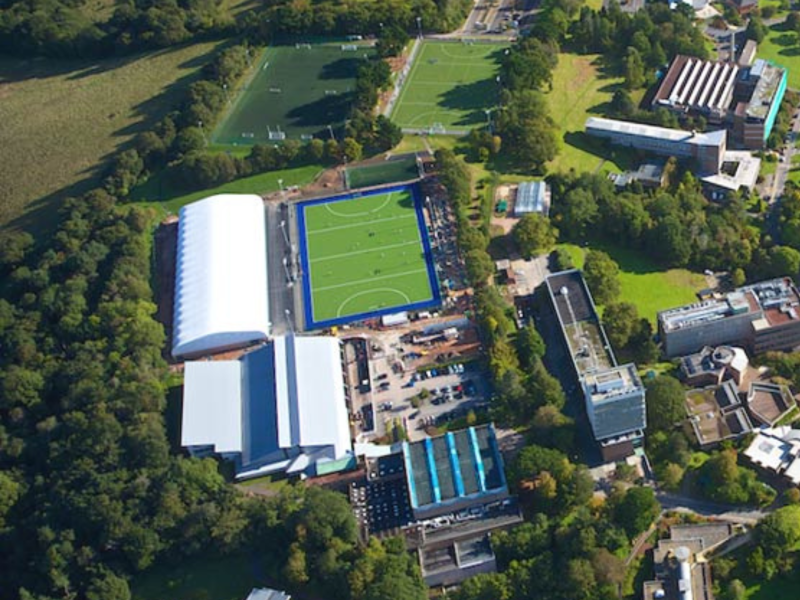
- Exeter Sports Park – a large-volume sports facility designed for a high-use environment.
- Royal Bank of Trinidad and Tobago – an engineered tensile enclosure designed for a demanding tropical climate.
Designing for Year-Round Use
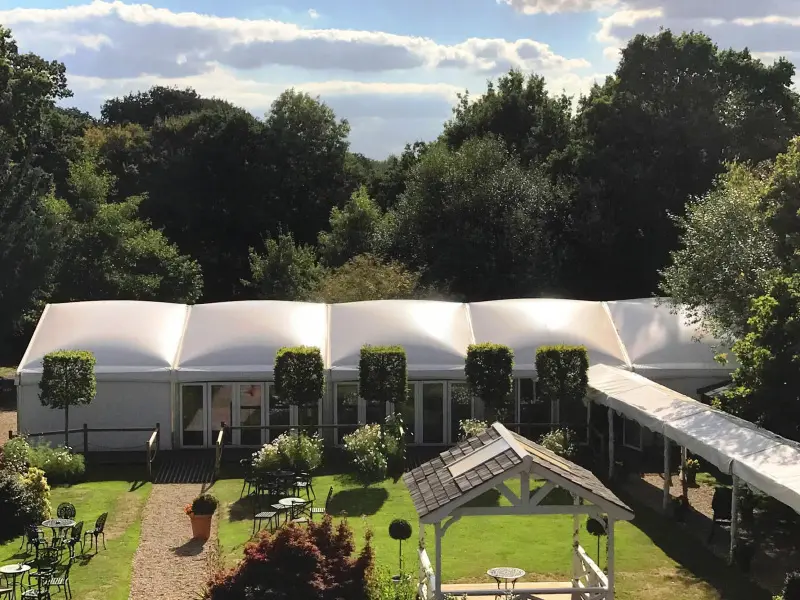
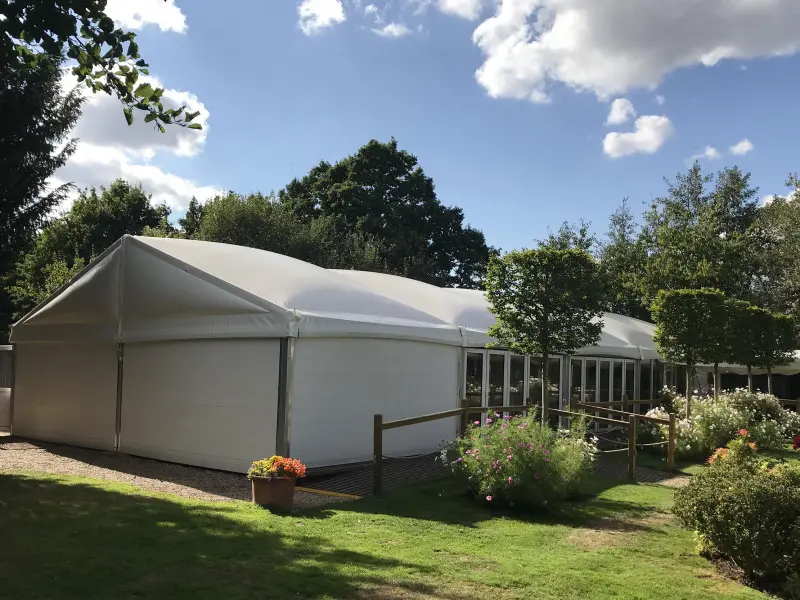
The thermal performance of a tensile building depends on more than the membrane itself. Structure, insulation, air spaces, liners, junctions, solar control and building services all need to work together. For architects and project teams, year-round tensile structures can provide a way to combine large clear spans with improved environmental performance.
This integrated approach makes it possible to develop large-span spaces that combine the architectural freedom of tensile construction with the thermal performance required for year-round use. Explore J&J Carter's insulated structures, tensile fabric materials or design and engineering services, or contact the J&J Carter team to discuss your project.
Frequently Asked Questions
Can insulated tensile structures meet building regulation requirements?
They can be engineered to meet demanding thermal-performance requirements, subject to the specification and requirements of the individual project. U-values, thermal bridging, condensation, airtightness and solar performance should all be considered.
Can an existing tensile structure be insulated?
In suitable structures, secondary insulation or lining systems can be retrofitted to improve thermal performance. The existing frame and proposed additional loads should be assessed before work begins.
How long do tensile membranes last?
Service life depends on the membrane material, environmental exposure, detailing and maintenance. High-performance architectural membranes can provide service lives measured in decades, with the exact expectation determined by the specified material and project conditions.
Are tensile structures more cost-effective than traditional construction?
They can provide advantages in structural weight, foundations, fabrication and installation for suitable applications. However, costs should be compared on a project-specific basis because requirements vary considerably between buildings.