
Specifying the Right Keder and PVC for Tensile Architecture
26 Jun 26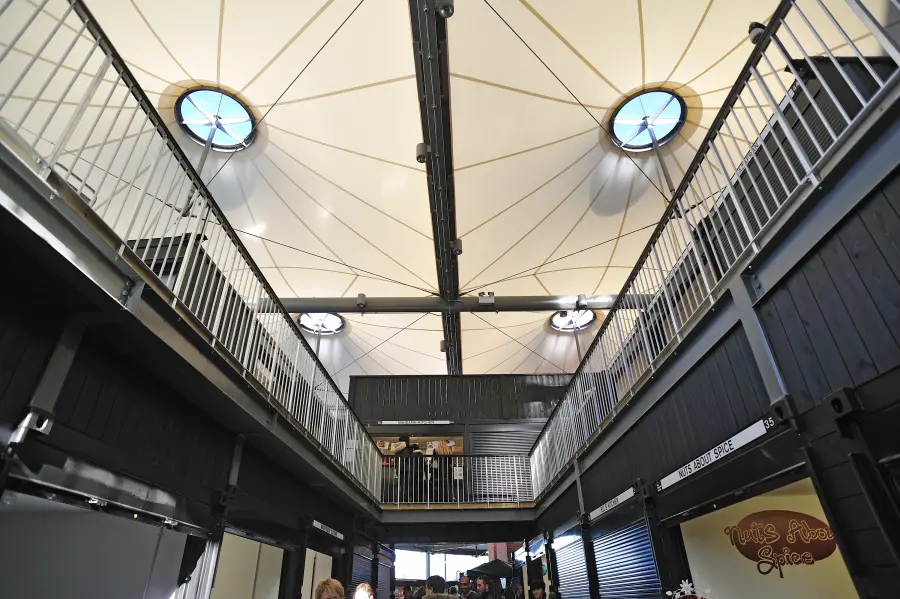
When designing tensile structures, modular event spaces, or industrial fabric enclosures, material specification directly impacts structural integrity, regulatory compliance and project liability. Incorrectly calculating material tolerances can result in fabric deflection, premature wear at connection points, or non-compliance with building regulations and insurance requirements.
This reference guide by J & J Carter outlines the technical specifications for PVC membranes, Keder configurations and rail systems to assist in precise project planning.
Finding the Right PVC Membrane
Selecting the appropriate PVC weight requires balancing structural load requirements (wind, snow and live loads) against the self-weight of the material. Excessively light fabric faces tearing or deflection under stress, while overly heavy fabric introduces unnecessary dead load to the supporting framework.
As a UK manufacturer of architectural fabrics, J & J Carter engineers distinct tensile fabric materials categorised by weight and coating specification:
| Material Class | Fabric Weight Range | Typical Applications & Spans | Key Structural Benefit |
| Lightweight (Class I) | 400-600 g/m2 | Small event marquees, pagoda roofs, short spans (<6m). | High flexibility, easy to handle and rapid to deploy. |
| Medium-Weight (Class II) | 600 - 850 g/m2 | Commercial event structures, temporary warehouses, mid-spans (6m - 15m). | PVC - Acrylic: Excellent balance of tensile strength, UV resistance and cost-efficiency with a 15-year design life. |
| Heavy-Duty (Class III/IV) | 850 - 1200 g/m2 | Permanent industrial storage, sports domes, large spans (15m+). | PVC - PVDF: Maximum tear resistance, extreme weather/dirt durability and maximum dimensional stability with a 20+ year design life. |
Material Selection in Practice
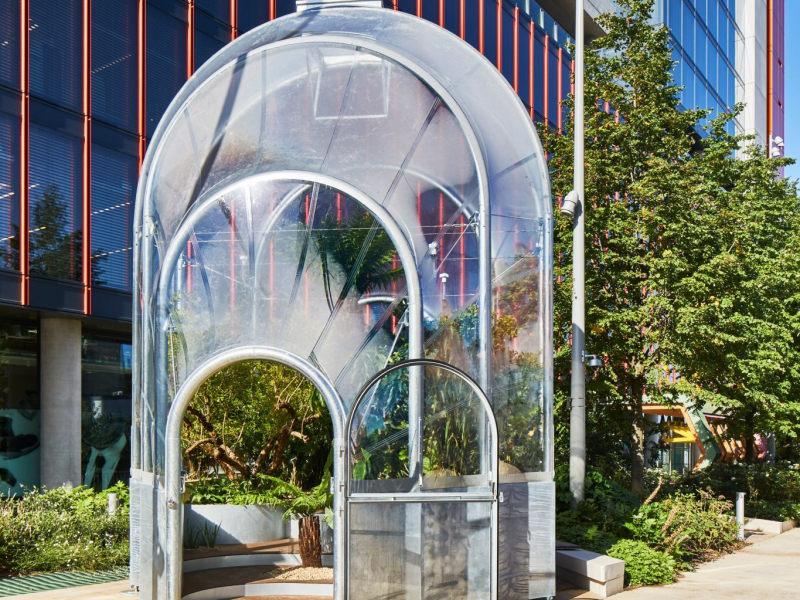
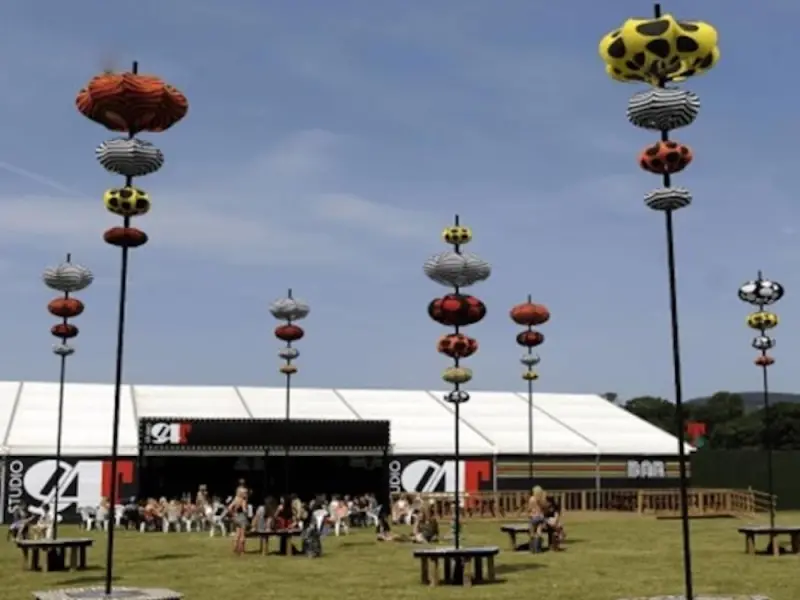
Unsupported or specialised clear PVC membranes present distinct engineering challenges due to dimensional instability from temperature fluctuations. During the engineering phase of the London Design Festival "Hothouse" project, J & J Carter ran rigorous form-finding and bi-axial testing—applying a 0.1% compensation with a 1.0 kN/m pre-stress to manage elongation under load across a series of structural steel arches.
Compliance Note: For UK installations, specify PVC membranes that comply with BS 7837 or EN13501-1 flame retardancy standards.
Keder Selection: Single-Flag vs. Heavy-Duty Double-Flag
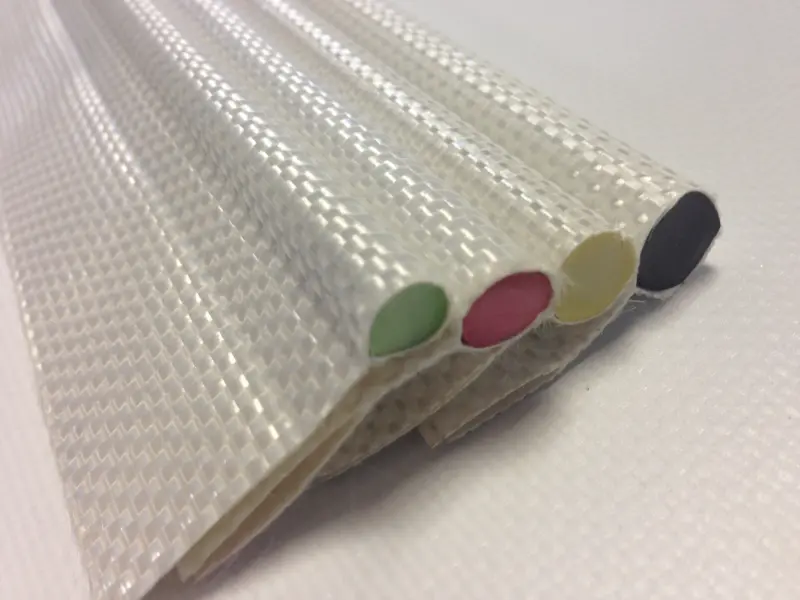
The Keder system is the connection between fabric and structural members. It transfers the wind and structural loads from the fabric envelope into the aluminium or steel frame extrusion. Specifying the correct configuration ensures the load path remains continuous and secure.
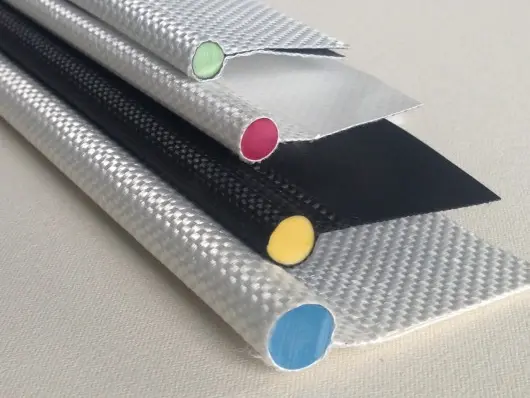
- Single-Flap Keder: Comprises a single weld-flap extending from the core cord. It is specified for standard applications, modular side walls and smaller spans where tension forces are moderate. It provides a lower profile and a cost-effective connection for low-load panels.
- Double-Flap Keder: Features two parallel weld-flaps that sandwich the PVC fabric panel, creating a dual-bond line. This configuration is required for large-span roofs, high-wind zones and permanent industrial fabric buildings. Enclosing the fabric on both sides reduces the peel stress on the weld seam, increasing overall tear resistance under high mechanical tension.
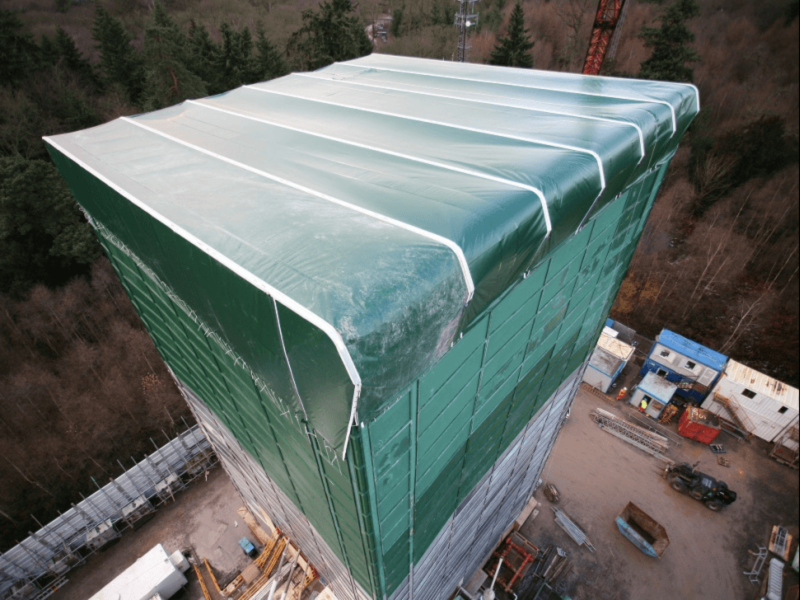
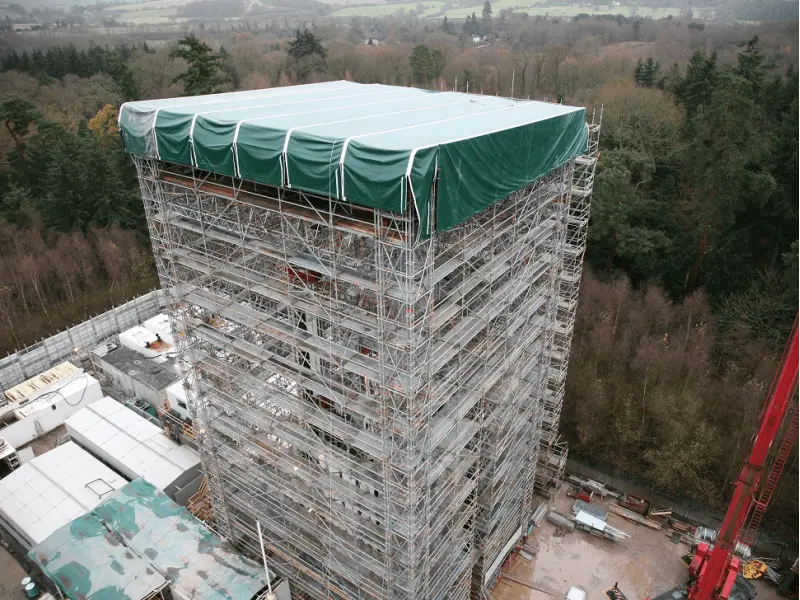
The application of a specialised roofing connection under extreme load is demonstrated in the Tone Scaffolding case study, where a custom PVC Keder roofing system was manufactured for noise containment atop a free-standing 37-meter-high structure. Understanding different keder applications is critical to matching the fabric panel to the structural frame geometry.
Core Diameters: Matching Keder to the Profile
The core diameter of the Keder must precisely match the internal channel of the structural profile. Deviations in tolerances present distinct failure modes: an undersized core risks pulling out under wind load, while an oversized core causes excessive friction during installation.
- 3mm - 6mm Cores: Primarily used for lightweight signage, banners and small internal partitioning.
- 7mm - 9mm Cores: The industry standard for residential and commercial party tent panels.
- 11mm – 15mm Cores: Specified for heavy-duty industrial roofs and large-span structures requiring high pre-tensioning forces.
Reducing Installation Friction: EasyGlide Keder
Material performance during assembly is a critical factor in project timelines. Large, heavy-duty PVC panels generate substantial friction when drawn through long metal tracks, risking fabric abrasion or stalling the installation process.
To manage this installation variable, engineers can specify the EasyGlide Keder. Manufactured with a specialised lacquer, this component reduces the coefficient of friction within the aluminium channels. This specification optimises installation speed, reduces required onsite labour and minimises mechanical wear on the fabric during deployment.
Load Distribution and Keder Rail Accessories
A tensile fabric structure requires uniform pre-tensioning to prevent wind-whipping and material fatigue. Incorporating specific keder solutions and keder rails into the technical specification ensures the envelope remains structurally stable:
- Tensioning Bars & Ratchet Systems: Used in conjunction with the Keder system to apply linear tension across the fabric panel, ensuring even wind-load distribution.
- Keder Feeders & Guides: Installed at the entry point of the rail channel to guide the Keder smoothly, preventing the fabric from snagging or tearing against sharp metal edges during the pull-through.
- Aluminium Keder Rails & Stop Blocks: High-grade mill finish aluminium Keder rails secure the fabric envelope. Once tensioned, locking components prevent dynamic shifting or sliding within the track during high-wind events.
A precise architectural execution of this tracking can be seen in the Victoria Square Belfast case study. For this project, internal tensile fabric sunscreens were engineered using a Class 0 fire-rated PVC-coated glass fibre membrane, with individual panels connected via a custom Keder track system and catenary tensioned vertically to control solar gain.
Engineering for Structural Integrity
In tensile architecture, the fabric envelope and its connection components function as active structural elements. This performance profile is why Keder is fundamental to tensile fabric architecture. Specifying a high-quality, UV-stabilised PVC keder UK system ensures predictable performance, longevity and structural safety.
For precise technical data sheets, CAD drawings, or custom Keder and PVC material specifications for an upcoming project, contact the technical manufacturing team at J & J Carter.