
The Strategic Case for Proactive Structural Refurbishment
17 Aug 26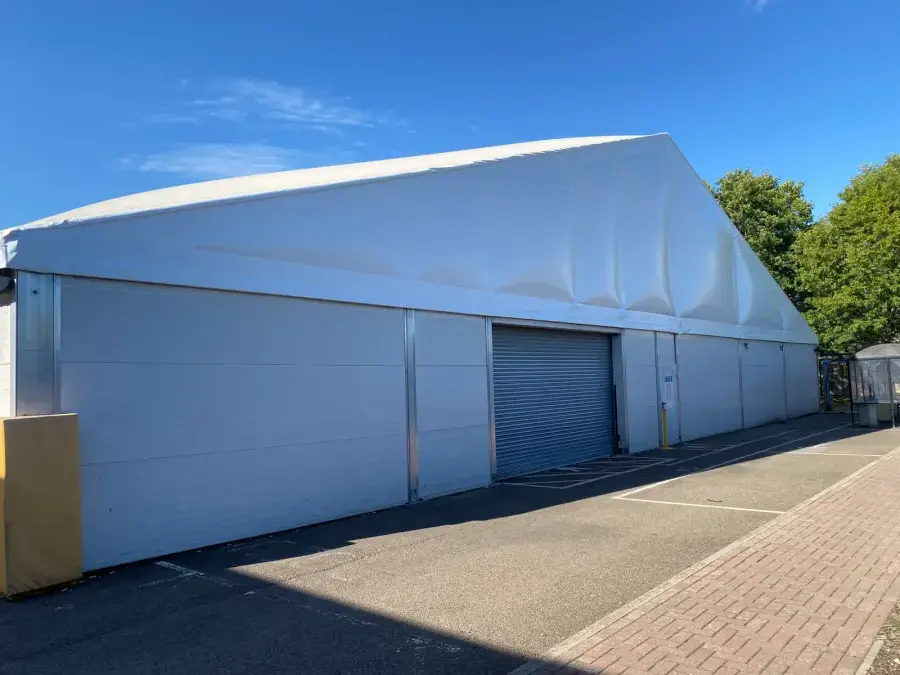
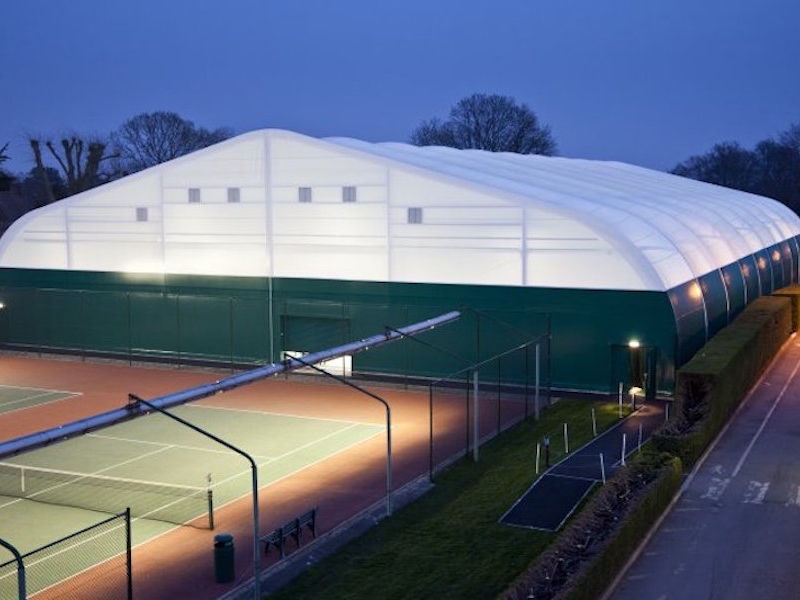
For architects, surveyors and project managers, a tensile structure is rarely a set and forget asset. While high-performance fabrics and aluminium frames are engineered for durability, they operate in unforgiving environments.
Whether it is a prestigious hospitality structure or a high-traffic sports hall, the transition from operational to end-of-life is often accelerated by neglect rather than material failure.
When your project encounters degradation, be it weathered keder rails, compromised fabric integrity or structural fatigue, you are faced with a critical decision: reactive replacement or proactive refurbishment.
The Cost of Inaction: Why Proactive Wins
Proactive structural refurbishment is the most cost-effective way to extend the lifespan of a tensile asset, often adding years of utility to an existing installation. Waiting for a structural failure to trigger an intervention is a costly strategy that often results in emergency call-outs, inflated costs and unplanned downtime. In contrast, our proactive maintenance and aftercare services allow you to:
- Extend Asset Life: Address minor tears, weld failures, or rail obstructions before they compromise the entire structural envelope.
- Budget Predictability: Shift expenditure from emergency capital outlay to manageable, planned maintenance cycles.
- Mitigate Liability: For surveyors and facility managers, documented maintenance and timely refurbishments are essential for compliance and safety certification.
Core Areas of Structural Refurbishment
1. Fabric Integrity & Keder Systems
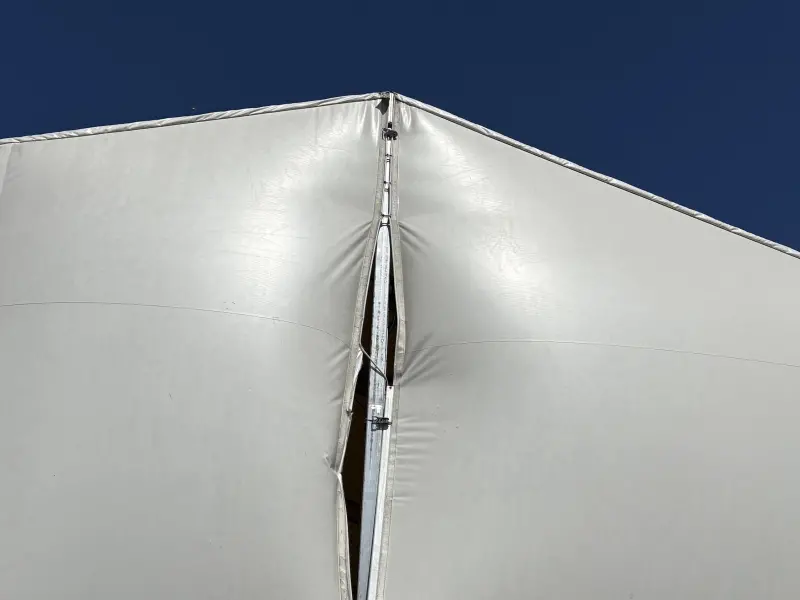
The keder and rail system is the lifeline of any tensile structure. Over time, friction, wind-loading and environmental debris can cause keder degradation or rail misalignment. We specialise in comprehensive marquee repairs and alterations, including:
- Keder & Rail Repair: Precision replacement of damaged sections to ensure weather-tight seals.
- Fabric Patching vs. Re-skinning: Assessing whether localised repairs can provide an effective, cost-efficient solution or if a full fabric replacement is required to meet structural performance standards.
2. Structural & Frame Assessments
The integrity of the frame is paramount. Even if the fabric is sound, a compromised frame, due to corrosion, fatigue, or mechanical damage, puts the entire installation at risk. We apply the same technical rigour to repairs as we do to new builds, ensuring that any alterations or reinforcements meet modern safety codes.
3. Cleaning & Environmental Maintenance
Biological growth and pollution aren't just aesthetic issues; they are chemical ones. Acidic bird droppings and fungal buildup can degrade the PVDF or PTFE coating on fabrics. Professional cleaning is not a luxury; it is a protective coating application that maintains the membrane’s designed lifespan.
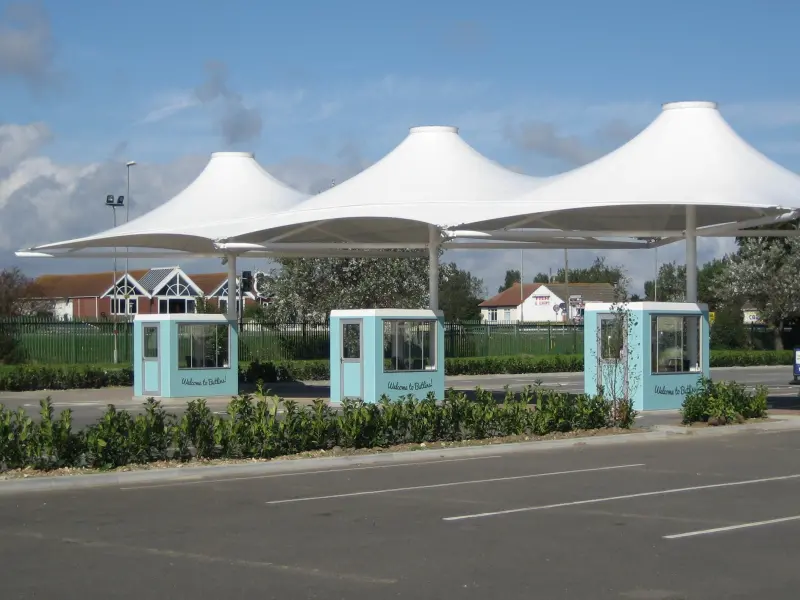
Real-World Application: The Proven Approach
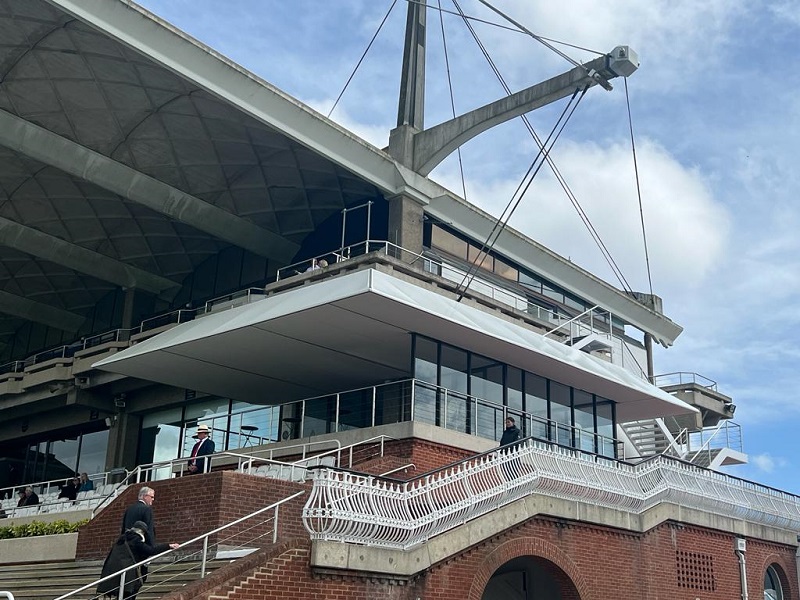
At J&J Carter, we view every site as unique. We have successfully applied this ethos to complex, high-stakes environments, such as our work on the Goodwood Racecourse: Duke’s Box. This project serves as a prime example of how laser-surveyed structural refurbishment can restore functionality and aesthetics to iconic venues.
Whether it is a minor repair or a large-scale structural overhaul, our project management team works with you to identify the "tipping point" where a simple repair becomes a liability, providing the data-backed recommendations necessary to justify capital expenditure to stakeholders.
Is Your Asset Ready for Audit?
Do not wait for a structural failure to dictate your schedule. If you are managing a portfolio of tensile structures and require an expert assessment of their current condition, the time to act is during your next maintenance window.
- Consultation: Review your current maintenance schedule with our technical team.
- Site Audit: Schedule a comprehensive inspection to identify potential failure points.
- Strategic Repair: Execute a planned refurbishment that secures the asset for the next 5–10 years.
For further technical insights on our capabilities, explore our full range of services or contact our team directly to discuss your specific project requirements.
By Robert Carter, Director at J&J Carter
Frequently Asked Questions
How often should a tensile structure be audited for structural integrity?
We recommend an annual site audit to identify early signs of wear, such as keder displacement or fabric tension loss, particularly after extreme weather seasons.
What is the difference between keder repair and full fabric replacement?
Keder repair is a targeted intervention to restore the weather-tight seal and mechanical connection of the fabric to the frame. Full replacement is usually only required when the base material has reached the end of its chemical or structural lifespan.
Can proactive refurbishment save on long-term insurance and liability costs?
Yes. Documented, professional maintenance schedules provide an audit trail for insurers, demonstrating that the asset is being managed according to safety best practices.
Is it possible to upgrade an older structure for better thermal performance during a repair?
Absolutely. During a refurbishment, we can often integrate modern insulation materials or high-performance membranes that significantly improve the thermal envelope of older structures.